

How Long To Cook Puerto Rican Pasteles
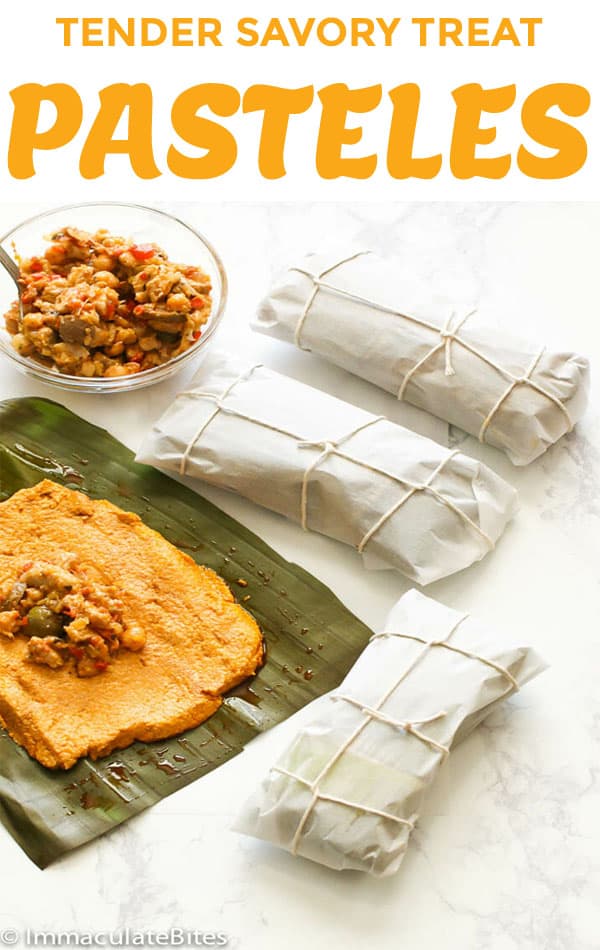
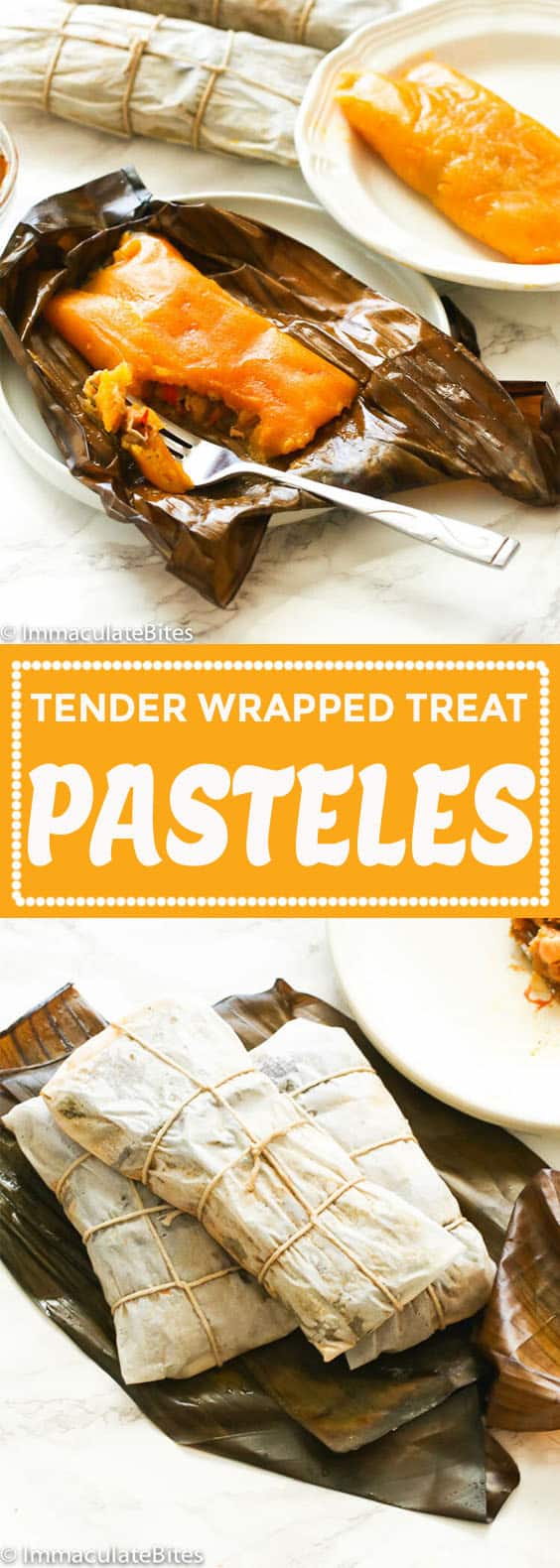
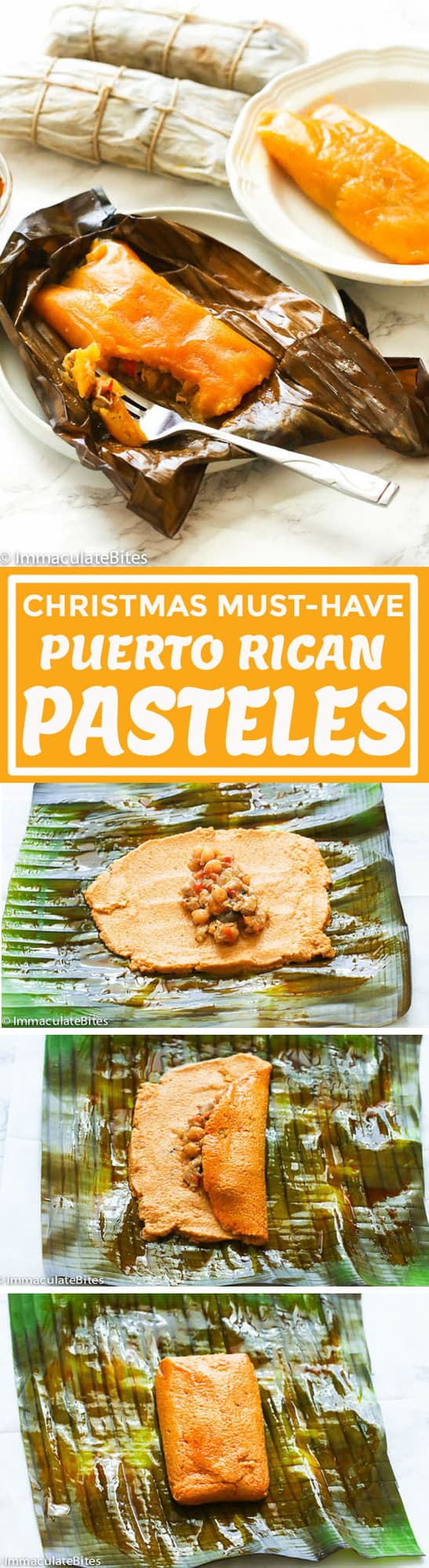
Pasteles – a traditional Puerto Rican Christmas dish that is tender, savory and complex in flavors. It's made of ground starchy case filled with a delicious savory meat stew, wrapped in banana leaves and boiled to cook through. A delicious treat to unwrap during the holidays!
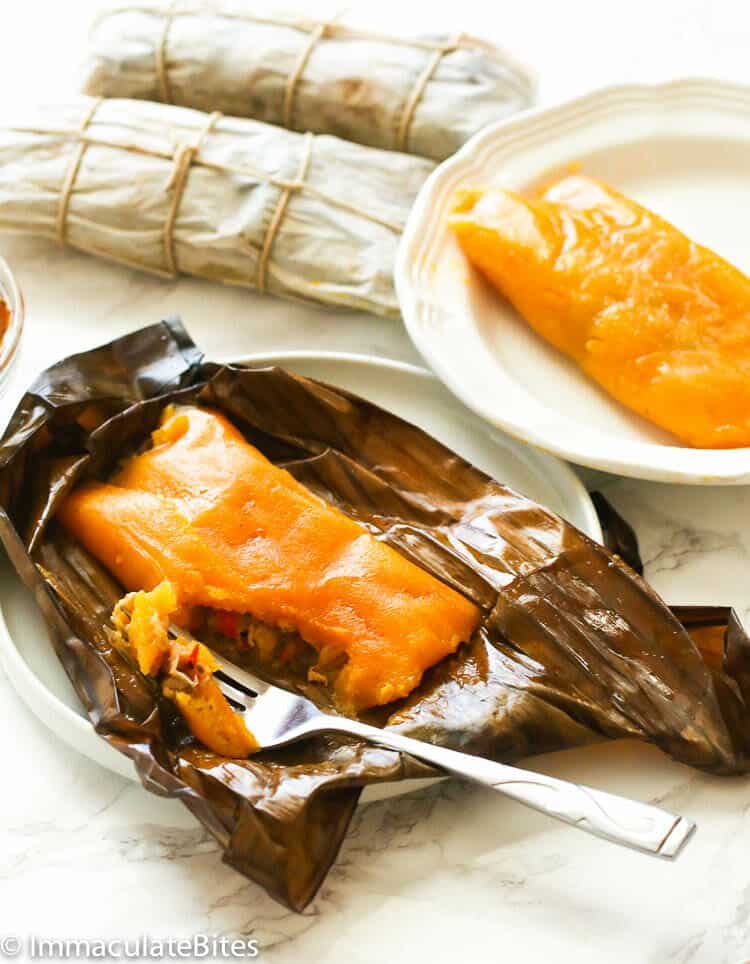
What are pasteles?
Labor of love! That's how I'd describe pasteles (pastel for singular) if you'd ask me. It's labor intensive, but it definitely is worth all the trouble.
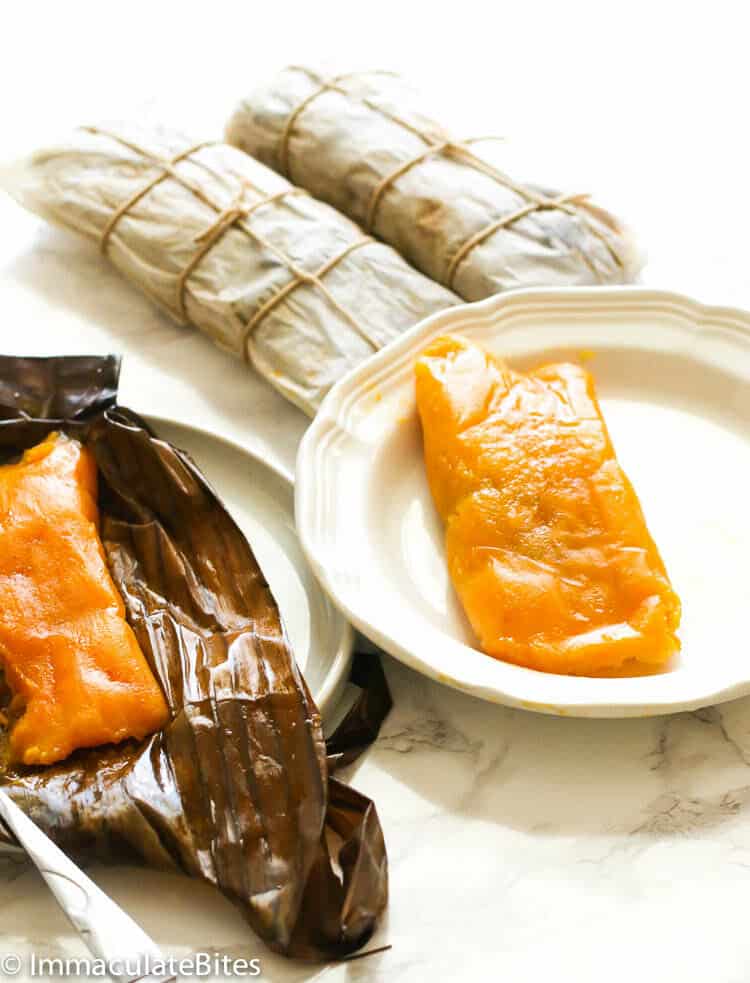
Pasteles are a traditional dish popular in several Latin American countries like Puerto Rico, Dominican Republic, Colombia, Panama and in Trinidad and Tobago. It closely resembles to that of Central American's tamale. A Christmas favorite, this wrapped dish is most often served with Pernil and Arroz con Gandules.
What are pasteles made of?
First of, pasteles have different variations. For instance, a Colombian pasteles are more like that of tamale. It is made of rice with pickled vegetables, chorizo, chicken, chickpeas and more, and then wrapped with a cabbage leaf first, and again with a banana leaf.
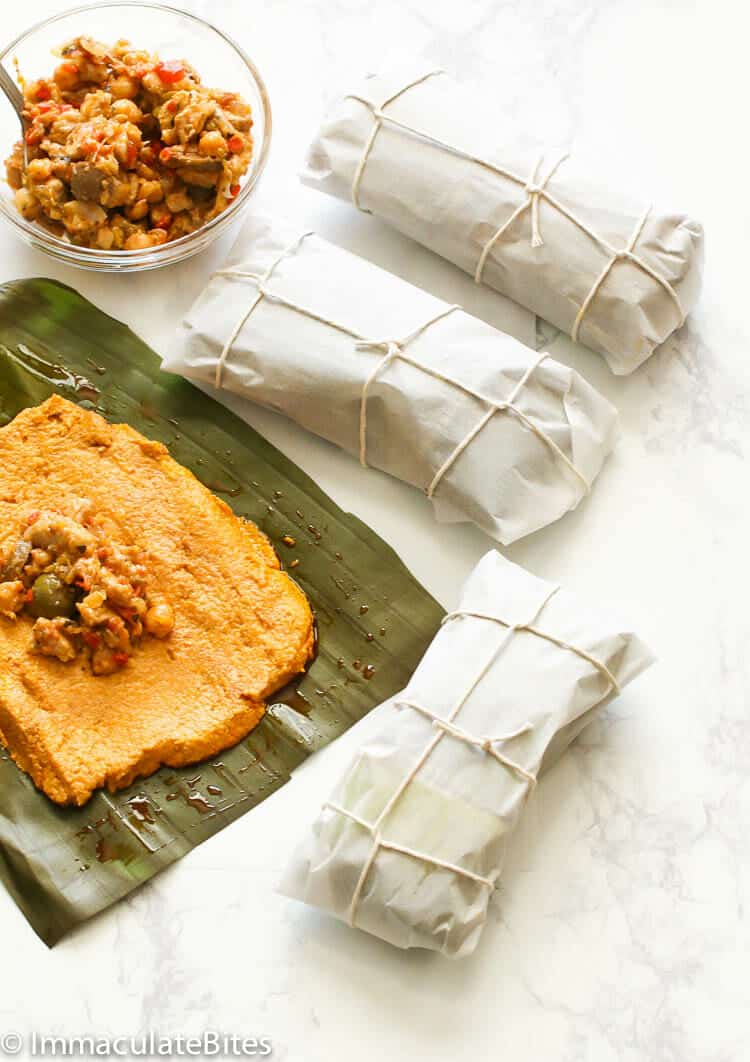
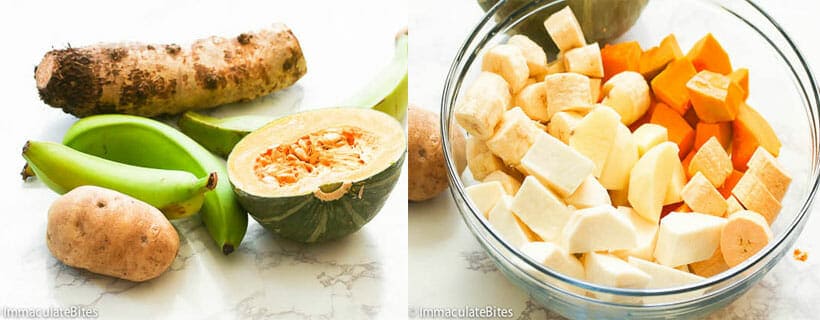
But what we'll have for today is a scrumptious Puerto Rican pasteles that's going to blow you away. The masa, or the starchy encasement, is usually made of this combination: green banana, green plantain, potato, eddoe (closely related to taro) and tropical pumpkins known as calabazas.
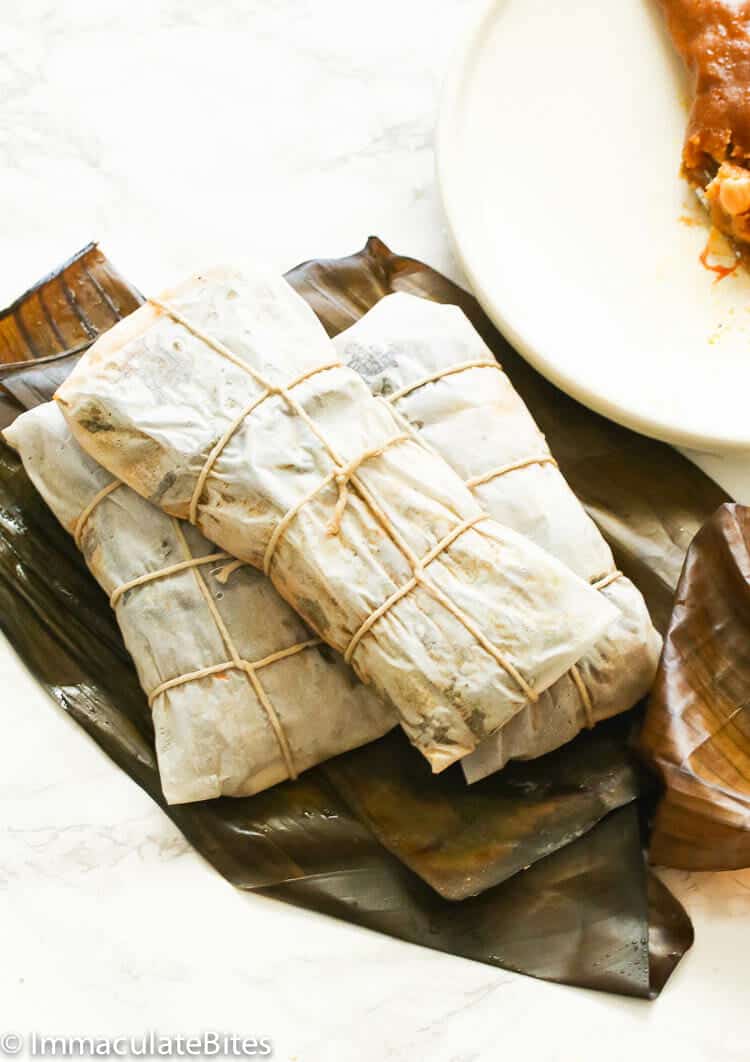
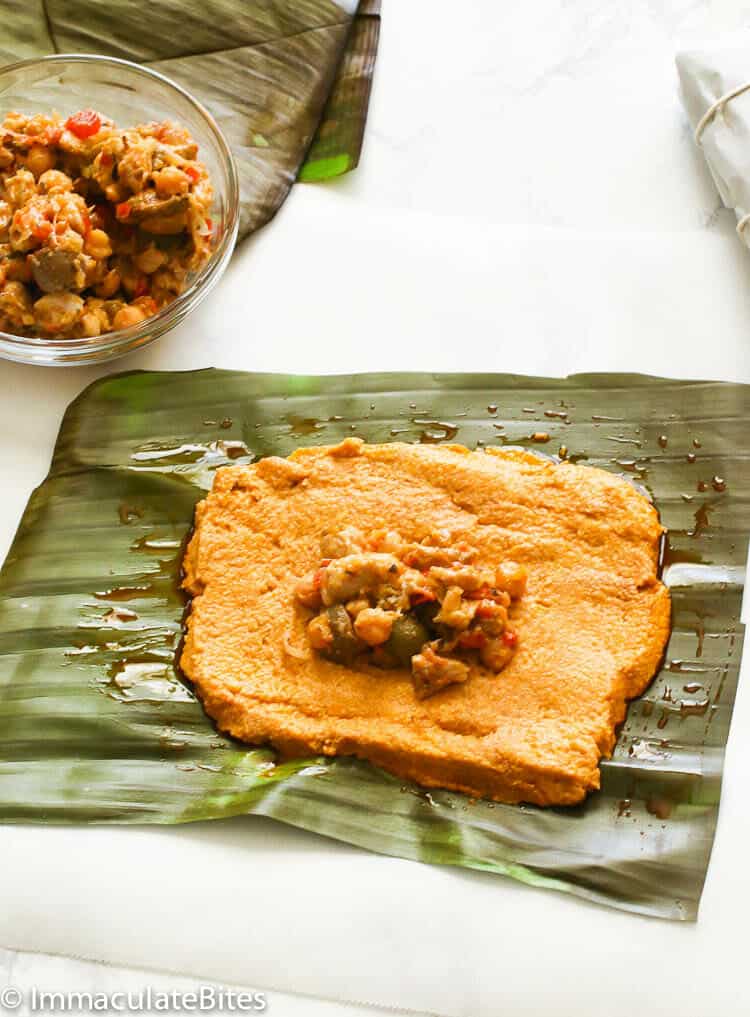
They are then finely grinded (thanks to a food processor), seasoned, spread flat to hold the meat stew and rolled and wrapped in steamed banana leaves. You can just imagine how complex and deep the flavors are in these pasteles!
Are tamales and pasteles the same?
I know you're pretty curious if this wrapped dish is the same as to that of Mexican's tamale. Well, they aren't exactly the same, but close enough. While pasteles are boiled, tamales on the other hand are steamed to cook through. Moreover, instead of ground green banana, eddoe, potato and calabazas, tamales uses ground corn (or hominy) to form the masa. And you can fill them, too, with basically just anything you'd like – cheese, fruits, vegetables and meats.
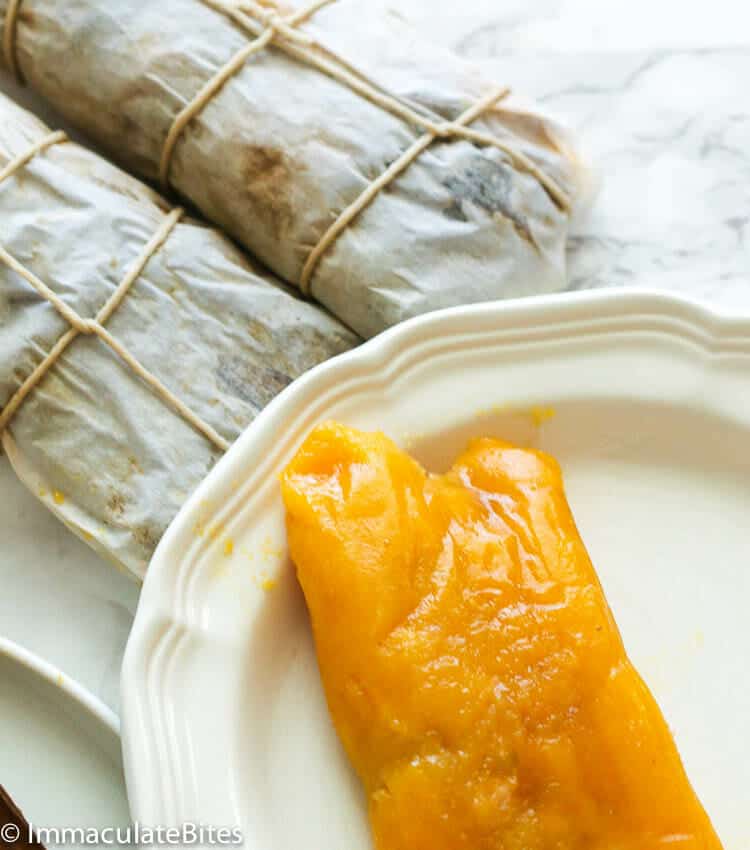
Making these pasteles might sound a bit intimidating, but don't let it stop you. The wonderful flavors wrapped within are so magical and captivating. What I also love about preparing this dish is that it's family-centered. It involves family cooperation as family members gather around to make an assembly line to prepare this dish. No wonder pasteles are best served on Christmas!
It's more than just a food; it's about the stories, laughters and cooperation while making this labor-of-love wrapped treat!
Enjoy!
How to Make Pasteles
Cut of both ends of cassava/yuca and then cut them in half. Make a shallow cut into the skin of the cassava and gradually work your knife under the layer of the cassava/yuca to remove the skin. Split in half then remove the inner woody core in the center discard it. Cut into small chunks and wash immediately to prevent discoloration and leave them in cool water until ready to use.
If making the traditional masa, peel the bananas, plantains, taro root, potatoes, cocoyams and pumpkin. Cut in small pieces and proceed with the rest of the instructions.
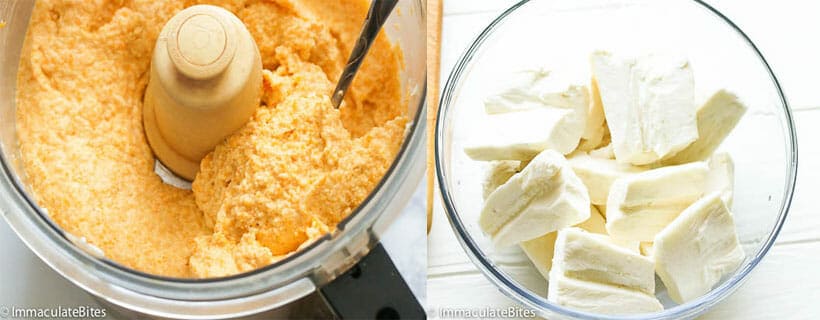 Pulse the cassava/yuca in a food processor with until puree or use a grater to grate it.
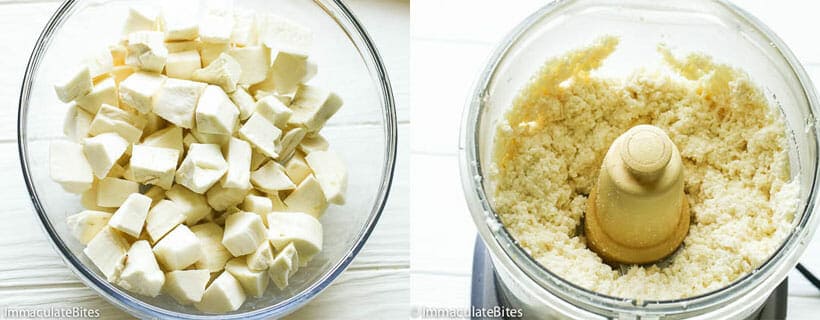 You may have to do so in batches.
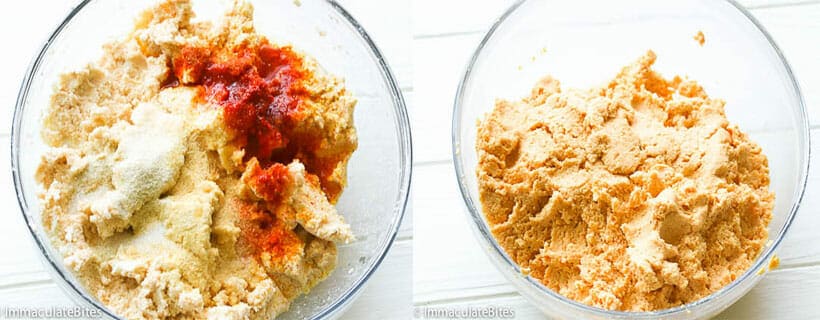 Pour it out in a large bowl, then add the garlic powder, onion, salt , oil and sazon- thoroughly mix and set aside.
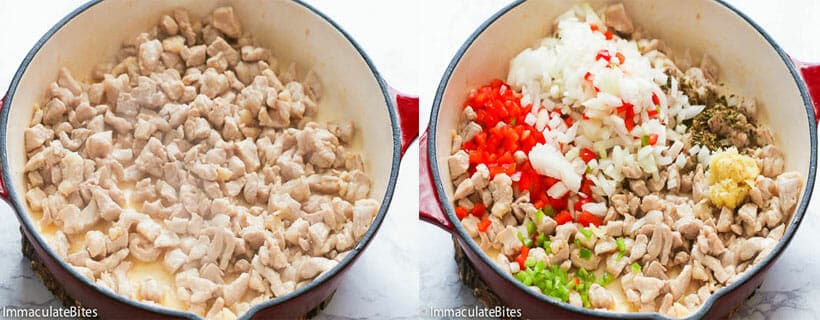 Place a large skillet over medium heat, as soon as it's hot add about 2-3 tablespoons oil, add diced pork and cook, until slightly brown or pork is no longer pink. This may take about 6-7 minutes.
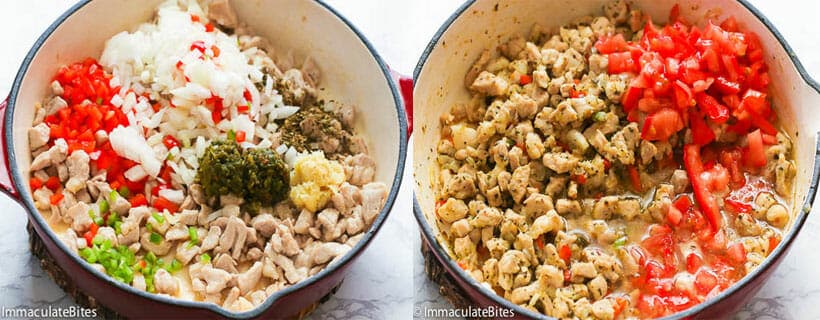 Add sofrito, garlic , onions, oregano and cumin to the skillet , cook about 3-5 minutes or until onions is wilted.
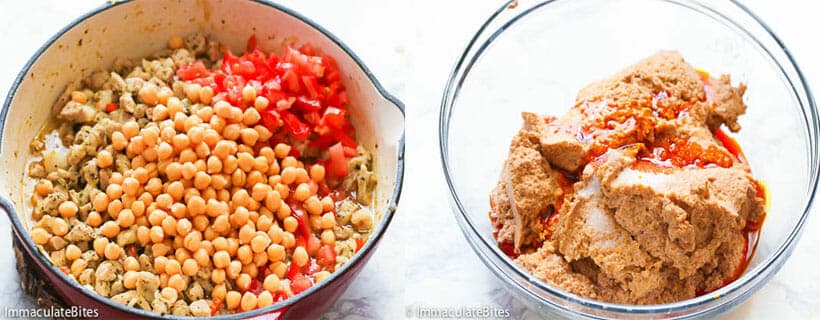 Throw in tomatoes and chickpeas, if using any. Then add about ¾ cup broth or water. Simmer uncovered until the the liquid reduces and just coats the pork, about 15 minutes or more. Season the pork filling to taste with salt and let cool ,slightly. Adjust seasonings spices, if needed. Set aside.
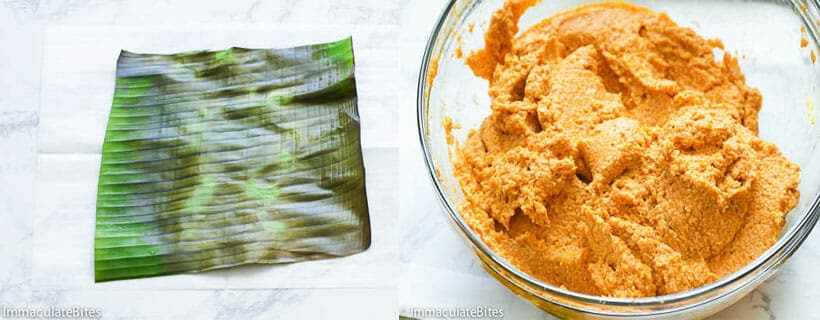 Prepare a work surface to assemble and wrap the pasteles. You may use a board or counter top for this process. If using freshly picked banana or plantain leaves, cut off the central rib and trim off the edges. Cut into the desired sizes. To make them flexible for folding, wilt in single layers, or slightly overlapping, in a 200F oven for 5-10 minutes.
An alternative method of wilting is to place the leaves directly over the coils of an electric range on low heat, or pass them carefully over the low flame of a gas range. Be careful not to burn them unduly. Wipe with a damp kitchen cloth or paper towel.
Cut the banana leaves into rectangles or squared, also cut off the central rib, if visible. Then trim off the edges. Next step would be to submerge them in water to clean, drain and pat- dry. They are now ready for using.
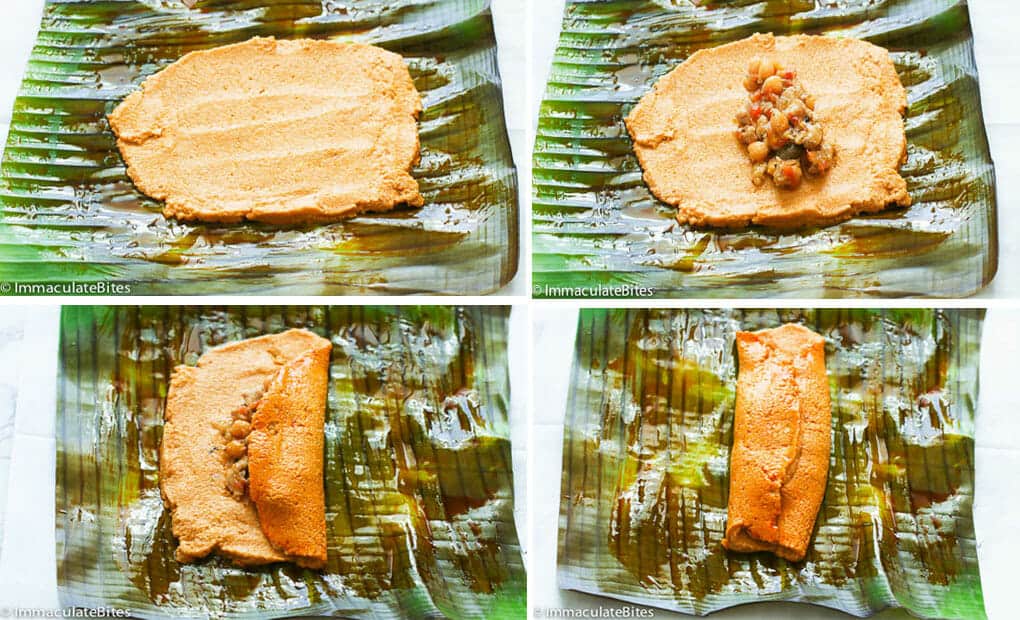 To start the wrapping – place one parchment paper on a surface and, topped with one piece of banana leaf. Then brush with with achiote oil. Add about 2 tablespoons of masa, spread masa to form a small square, just like in the pictures. Add about a spoon of pork filling to the masa. Pick up the edge of the pasteles closest to you, and fold it over the filling until the edge of the masa closest to you touches the on the other side.
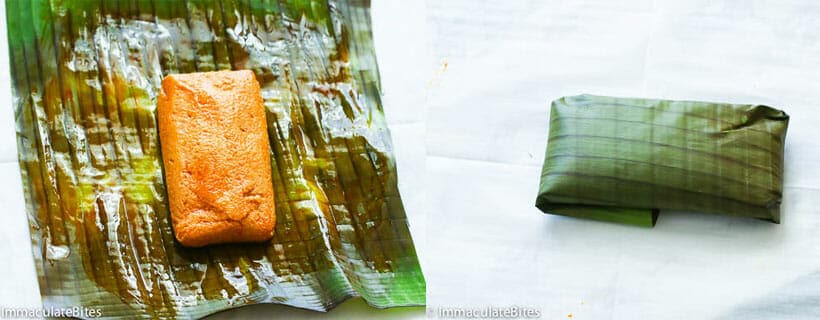 This helps the pastel to stay fully enclosed. Fold the bottom edge of the square up and over so that the masa encloses the pork filling. Tie the pasteles with kitchen string. Repeat to form the remaining pasteles.
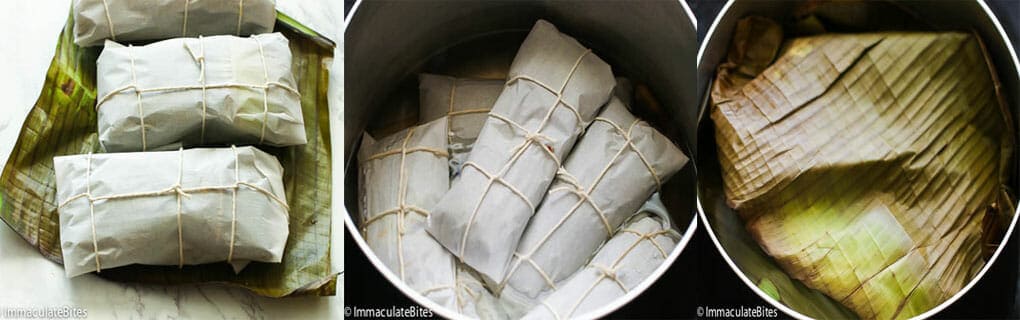 Line a large steamer or Large pot with a layer of banana-leaf scraps, use leftover scraps , if any. Add about a cup or more of water – then bring to a boil. Next, place the pasteles in two loose layers. Add as much hot water as needed to almost submerge the pasteles. Cover with any remaining banana leaves.
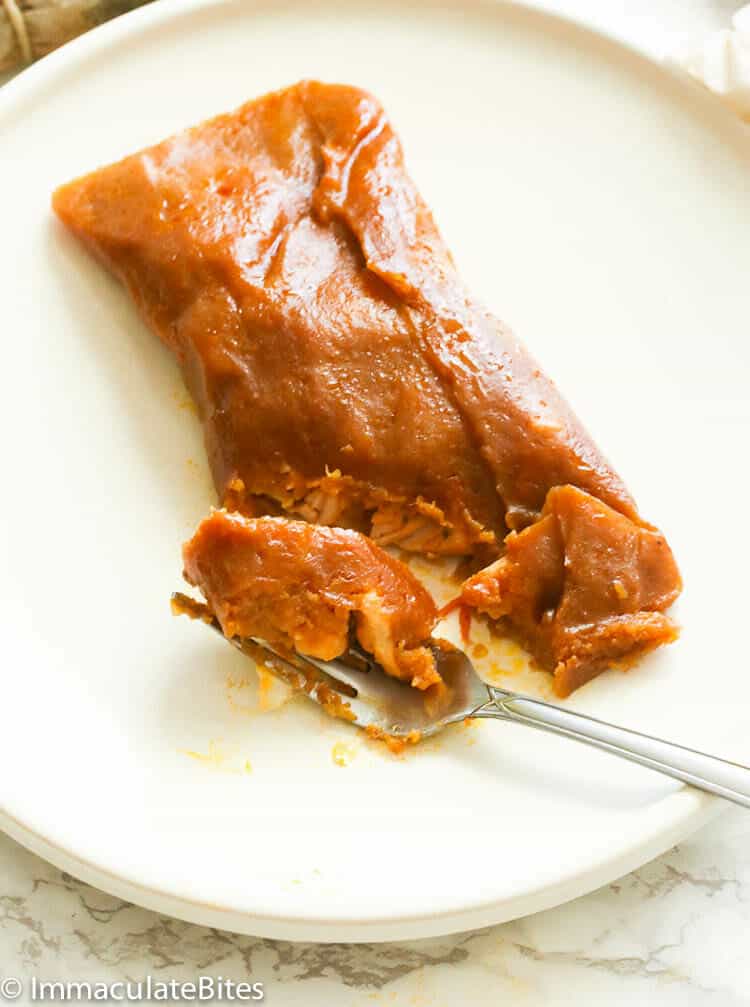
Let the pasteles cook for about an 1 hour or more, adding water as needed , you should not let the water dry out. Do a taste test, if needed to ensure that the pasteles are fully cooked. Turn the heat off and let the pasteles sit in the pot for for about an additional 20 minutes, so it cools down. Carefully remove pasteles with tongs, if they are hot. You do not want to get burned. Transfer the pasteles to a platter. Take off strings, carefully open pasteles – it releases hot steam as you open. Serve warm.
Watch How To Make It
Prep: 2 hrs
Cook: 1 hr
Total: 3 hrs
Puerto Rican
Pork Filling
- 2 pounds pork (from pork shoulder, finely diced)
- 2-3 teaspoons minced garlic
- 2-3 tablespoons Puerto Rican sofrito sauce
- 1 medium onion , finely diced
- 2 teaspoons oregano
- ½ cup red bell pepper
- 1-2 tablespoons jalapenos pepper
- 1 envelope Sazon sin achiote
- ½ cup chopped tomatoes or tomato sauce
- 1 cup chickpeas (optional)
- salt and pepper to taste
Cassava Masa Dough
- 6 lbs cassava / yuca
- 1 1/2 tablespoon garlic
- 2 tablespoons onion powder
- 1 teaspoon salt
- 2 packet Sazon with achiote
- 4-5 tablespoons achiote oil
Traditional Masa
- 5-6 green bananas
- 1 green plantain
- 1 pound yautias, cocoyams or taro root
- 1 medium potato
- 1 pound pumpkin (Calabaza) or squash
Masa (Dough)
-
Cut of both ends of cassava /yuca and then cut them in half.
-
Make a shallow cut into the skin of the cassava and gradually work your knife under the layer of the cassava/yuca to remove the skin. Split in half then remove the inner woody core in the center discard it.
-
Cut into small chunks and wash immediately to prevent discoloration and leave them in cool water until ready to use.
-
If making traditional masa, peel the bananas, plantains, taro root, potatoes, cocoyams and pumpkin.
-
Cut in small pieces and proceed with the rest of the instructions.
-
Pulse the cassava/yuca in a food processor with until puree or use a grater to grate it. You may have to do so in batches.
-
Pour it out in a large bowl, then add the garlic powder, onion, salt , oil and sazon- thoroughly mix and set aside.
Pork Filling
-
Place a large skillet over medium heat, as soon as it's hot add about 2-3 tablespoons oil, add diced pork and cook until slightly brown or pork is no longer pink. This may take about 6-7 minutes.
-
Add sofrito, garlic, onions, oregano and cumin to the skillet, cook about 3-5 minutes or until onions is wilted.
-
Throw in tomatoes and chickpeas, if using any. Then add about ¾ cup broth or water.
-
Simmer uncovered until the the liquid reduces and just coats the pork, about 15 minutes or more.
-
Season the pork filling to taste with salt and let cool slightly. Adjust seasonings spices, if needed. Set aside.
Assembling Pasteles
-
Prepare a work surface to assemble and wrap the pasteles. You may use a board or counter top for this process.
-
If using freshly picked banana or plantain leaves, cut off the central rib and trim off the edges. Cut into the desired sizes. To make them flexible for folding, wilt in single layers, or slightly overlapping, in a 200F oven for 5-10 minutes. An alternative method of wilting is to place the leaves directly over the coils of an electric range on low heat, or pass them carefully over the low flame of a gas range. Be careful not to burn them unduly. Wipe with a damp kitchen cloth or paper towel.
-
To start the wrapping, place one parchment paper on a surface and, top with one piece of banana leaf. Then brush with with achiote oil .
-
Add about 2 tablespoons of masa, spread masa to form a small square, just like in the pictures.
-
Add about a spoon of pork filling to the masa.
-
Pick up the edge of the pasteles closest to you, and fold it over the filling until the edge of the masa closest to you touches the on the other side. This helps the pasteles to stay fully enclosed. Fold the bottom edge of the square up and over so that the masa encloses the pork filling.
-
Tie the pasteles with kitchen string. Repeat to form the remaining pasteles.
-
At this point, you can freeze any pasteles you are not going to cook and eat right away. Place them in zip-top bags, date, label, and freeze.
Cooking Pasteles
-
Line a large steamer or Large pot with a layer of banana-leaf scraps, use leftover scraps, if any.
-
Add about a cup or more of water – then bring to a boil. Next, place the pasteles in two loose layers. Add as much hot water as needed to almost submerge the pasteles. Cover with any remaining banana leaves.
-
Let the pasteles cook for about an 1 hour or more, adding water as needed, you should not let the water dry out. Do a taste test, if needed to ensure that the pasteles are fully cooked.
-
Turn the heat off and let the pasteles sit in the pot for for about an additional 20 minutes, so it cools down.
-
Carefully remove pasteles with tongs, if they are hot. You do not want to get burned.
-
Transfer the pasteles to a platter. Take off strings, carefully open pasteles – it releases hot steam as you open.
-
Serve warm.
- Please keep in mind that nutritional information is a rough estimate and can vary greatly based on products used.
Serving: 1 g | Calories: 855 kcal (43%) | Carbohydrates: 146 g (49%) | Protein: 23 g (46%) | Fat: 21 g (32%) | Saturated Fat: 8 g (50%) | Polyunsaturated Fat: 2 g | Monounsaturated Fat: 9 g | Cholesterol: 65 mg (22%) | Sodium: 341 mg (15%) | Potassium: 1848 mg (53%) | Fiber: 11 g (46%) | Sugar: 18 g (20%) | Vitamin A: 4500 IU (90%) | Vitamin C: 85 mg (103%) | Calcium: 116 mg (12%) | Iron: 3 mg (17%)
Course: Main
Cuisine: Puerto Rican
Keyword: holiday recipes, pasteles
How Long To Cook Puerto Rican Pasteles
Source: https://www.africanbites.com/pasteles/
Posted by: mccuneeverytheir36.blogspot.com
0 Response to "How Long To Cook Puerto Rican Pasteles"
Post a Comment